
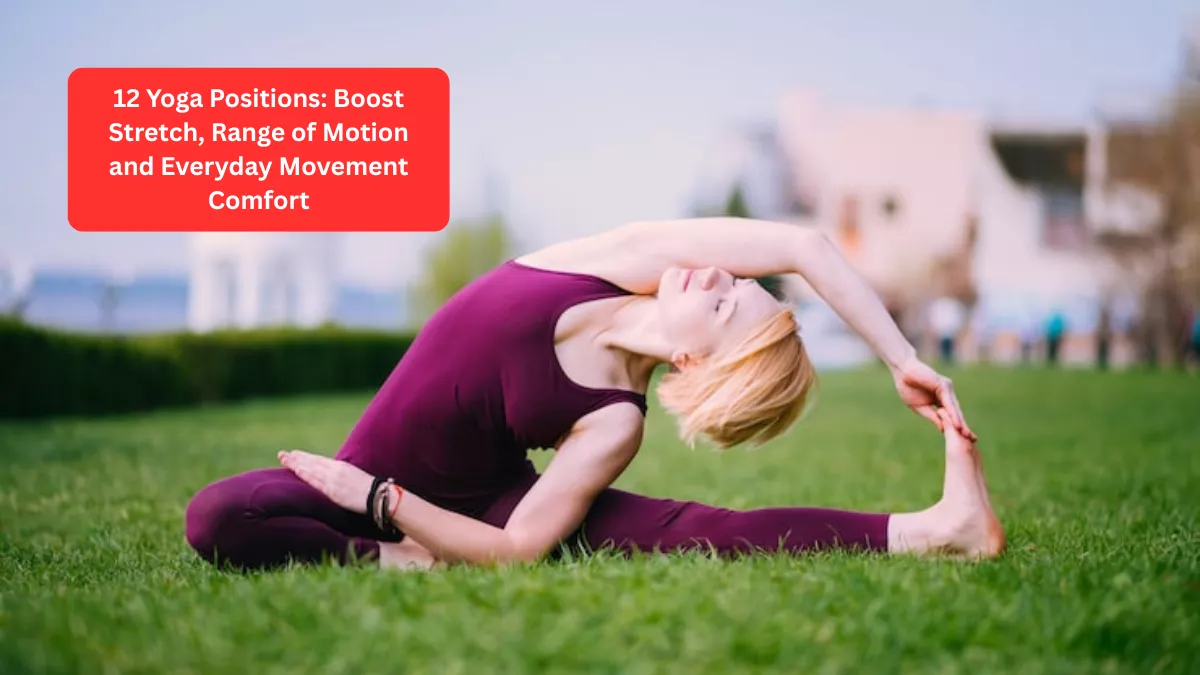
Do your hips feel tight after long hours at a desk? Does your lower back complain when you bend to tie your shoes? You’re not alone. Modern life limits natural movement. Sitting, driving, and screen time reduce flexibility and strain muscles that were meant to move freely.
That’s where yoga comes in.
Yoga is not just about flexibility or complex poses on social media. At its core, it’s a practical system of movements designed to improve mobility, balance, muscle control, and joint health. When practiced correctly, yoga can increase range of motion, reduce stiffness, and make everyday activities—like lifting groceries or climbing stairs—feel easier and more comfortable.
In this guide, you’ll discover 12 effective yoga positions that target key muscle groups, improve stretch capacity, and support pain-free movement. Each pose includes practical insights and tips so you can practice safely and confidently.
12 Essential Yoga Positions for Better Stretch and Mobility
1. Mountain Pose (Tadasana)
It may look simple, but Mountain Pose builds posture awareness. Stand tall with feet hip-width apart, shoulders relaxed, and spine neutral.
Benefits:

- Improves posture alignment
- Engages core and leg muscles
- Builds body awareness
Why it matters: Proper alignment reduces strain on joints and sets the foundation for all other poses.
2. Downward-Facing Dog (Adho Mukha Svanasana)
This full-body stretch targets hamstrings, calves, shoulders, and spine.
Benefits:
- Lengthens the posterior chain
- Increases shoulder mobility
- Enhances circulation
Tip: Bend your knees slightly if hamstrings feel tight. Focus on lengthening the spine first.
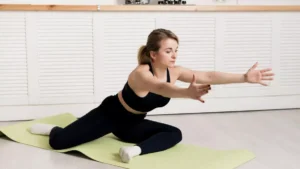
3. Cat-Cow Pose (Marjaryasana-Bitilasana)
A gentle spinal flow that improves mobility.
Benefits:
- Lubricates spinal joints
- Reduces stiffness in back and neck
- Improves coordination between breath and movement
This is ideal in the morning or after long sitting periods.
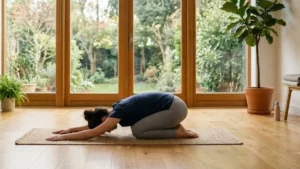
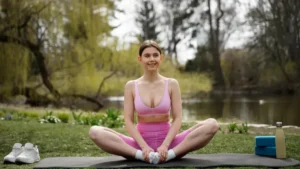
4. Child’s Pose (Balasana)
A restorative stretch for hips, thighs, and lower back.

Benefits:
- Relieves tension in spine
- Gently opens hips
- Encourages relaxation
If knees feel sensitive, place a cushion between thighs and calves.
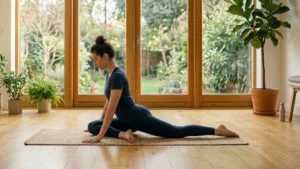
5. Low Lunge (Anjaneyasana)
Sitting shortens hip flexors. Low Lunge opens them.
Benefits:
- Improves hip mobility
- Enhances stride length
- Supports lower back comfort
Keep your front knee aligned over your ankle to protect the joint.
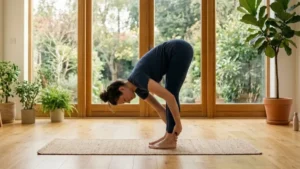
6. Standing Forward Fold (Uttanasana)
A deep stretch for hamstrings and lower back.
Benefits:
- Increases hamstring flexibility
- Reduces spinal compression
- Calms the nervous system
Avoid locking knees. Micro-bend them to prevent strain.
7. Warrior II (Virabhadrasana II)
Builds strength while increasing hip mobility.
Benefits:
- Strengthens legs and glutes
- Improves hip rotation
- Enhances stability
Strong muscles support flexible joints. Strength and stretch work together.
8. Triangle Pose (Trikonasana)
A powerful lateral stretch.
Benefits:
- Improves side-body flexibility
- Strengthens legs
- Enhances balance
Use a block if you can’t reach the floor comfortably.
9. Seated Forward Bend (Paschimottanasana)
Targets hamstrings and lower back.
Benefits:
- Lengthens spine
- Increases hamstring range
- Encourages calm breathing
Move from hips, not the lower back.
10. Bridge Pose (Setu Bandha Sarvangasana)
Opens the chest and strengthens the posterior chain.
Benefits:
- Activates glutes
- Stretches hip flexors
- Supports spinal stability
Avoid pushing into neck. Weight should stay on shoulders.
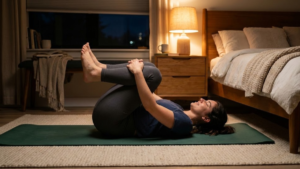
11. Supine Spinal Twist (Supta Matsyendrasana)
Gentle rotation improves spinal mobility.
Benefits:
- Releases lower back tension
- Encourages spinal rotation
- Improves digestion support
Move slowly and breathe deeply.
12. Pigeon Pose (Eka Pada Rajakapotasana – Modified)
Deep hip opener.
Benefits:
- Targets glutes and piriformis
- Improves hip rotation
- Supports knee alignment
If intense, practice a reclined figure-four stretch instead.
How to Practice Safely and Maximize Results
Improving range of motion isn’t about forcing deeper stretches. It’s about consistency and control.
Follow these practical guidelines:
- Warm up first: Light movement increases blood flow and reduces injury risk.
- Breathe steadily: Slow breathing helps muscles relax.
- Avoid pain: Mild discomfort is normal. Sharp pain is not.
- Practice 3–5 times weekly: Consistency builds flexibility.
- Hold poses 20–40 seconds: This supports tissue adaptation.
Why Range of Motion Matters
Better mobility means:
- Easier daily tasks
- Reduced injury risk
- Improved posture
- Better athletic performance
- Less chronic stiffness
Research in movement science shows that combining strength and flexibility improves joint health more effectively than stretching alone.
Building a Simple 15-Minute Routine
Short on time? Try this flow:
- Cat-Cow (1 minute)
- Downward Dog (1 minute)
- Low Lunge (1 minute per side)
- Warrior II (1 minute per side)
- Triangle Pose (1 minute per side)
- Seated Forward Bend (2 minutes)
- Supine Twist (1 minute per side)
This balanced routine improves flexibility in hips, hamstrings, shoulders, and spine.
Last Thought
Mobility is freedom. When your body moves well, daily life feels lighter and more comfortable. These 12 yoga positions are practical tools—not just exercises, but long-term investments in joint health and movement quality.
Start slow. Stay consistent. Focus on form, not depth. Over time, you’ll notice less stiffness, better posture, and smoother everyday movement.
Your body is designed to move. Give it the care it deserves.