
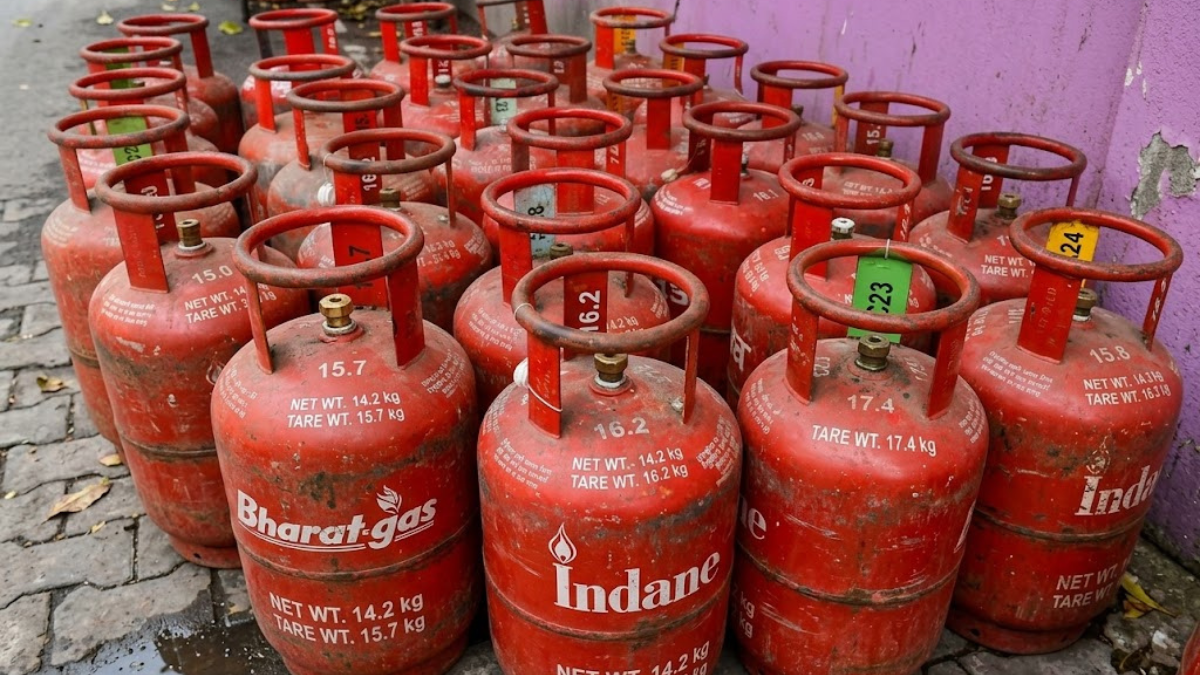
Domestic LPG cylinder prices in India have seen a noticeable rise in March 2026, impacting millions of households that depend on cooking gas for their daily meals.
The price of a 14.2 kg domestic LPG cylinder in New Delhi has increased to ₹913, compared to ₹853 last month, marking a ₹60 price hike. This revision reflects ongoing fluctuations in the global energy market.


Experts say the adjustment comes at a time when international energy markets are experiencing uncertainty due to geopolitical tensions and disruptions in global shipping routes.
Despite these developments, government officials have assured citizens that there is no shortage of LPG supply in India. Authorities confirm that the country has sufficient reserves and distribution capacity to meet the needs of consumers.
Latest LPG Cylinder Prices in Major Indian Cities
The cost of LPG cylinders varies slightly from city to city. These differences usually occur due to transportation costs, local taxes, and distribution expenses.
Below are the current prices of a 14.2 kg domestic LPG cylinder in some major Indian cities:
| City | LPG Price (₹/Cylinder) |
|---|---|
| New Delhi | ₹913.00 |
| Mumbai | ₹912.50 |
| Kolkata | ₹939.00 |
| Chennai | ₹928.50 |
| Bengaluru | ₹915.50 |
| Chandigarh | ₹862.50 |
| Hyderabad | ₹965.00 |
| Jaipur | ₹916.50 |
| Lucknow | ₹950.50 |
| Noida | ₹910.50 |
| Gurgaon | ₹921.50 |
| Bhubaneshwar | ₹939.00 |
| Patna | ₹1002.50 |
| Trivandrum | ₹922.00 |
Among these cities, Patna currently has the highest LPG price, crossing the ₹1000 mark per cylinder. Meanwhile, Chandigarh records one of the lowest LPG prices among major urban centers.
Reasons Behind the LPG Price Increase in March 2026
The March 2026 price revision represents the largest monthly increase seen in the past year. Between April 2025 and March 2026, domestic LPG cylinder prices have risen by nearly ₹60 overall.
Several major factors influence these price changes:
- Fluctuations in global crude oil prices
- Changes in international shipping routes
- Geopolitical tensions affecting energy supply chains
- Rising transportation and logistics costs
- Government subsidy policies and taxation
Since LPG prices are linked to global crude oil markets, any change in international oil prices or shipping logistics can directly affect domestic LPG pricing in India.
Is There Any LPG Shortage in India?
Government authorities have clarified that India is not facing any LPG shortage.
According to Sujata Sharma, Joint Secretary (Marketing and Oil Refining) at the Ministry of Petroleum and Natural Gas, there has been no “dry-out” situation reported anywhere in the country.
Officials noted that LPG bookings recently surged, mainly because consumers rushed to secure cylinders after hearing rumors about potential shortages. However, this rise in demand was largely panic-driven, not caused by actual supply issues.
The government has reassured the public that distribution systems remain stable and LPG supply is functioning normally.
Impact of the Strait of Hormuz Situation on Energy Supply
Global energy markets have been closely monitoring developments around the Strait of Hormuz, one of the most important oil and gas shipping routes in the world.
Recent transport disruptions in this region raised concerns about global energy transportation.
However, India has reduced its reliance on this route. Officials report that around 70% of India’s crude oil imports now arrive through alternative shipping routes, compared with about 55% earlier.
This diversification strategy has helped India maintain a steady energy supply despite ongoing international logistical challenges.
How India Is Securing Its Crude Oil Supply
India currently consumes around 55 lakh barrels of crude oil per day. To ensure energy security, the country has adopted a strategy of importing oil from multiple global partners.
At present, India sources crude oil from nearly 40 different countries, a significant increase from 27 supplier nations in 2006–07.
This diversified import strategy reduces dependence on any single region and strengthens the nation’s long-term energy stability.
Officials have confirmed that sufficient crude oil reserves are already secured to meet current demand even during global supply disruptions.
Refineries Running at High Capacity
Indian oil refineries are currently operating at high production levels, with some facilities running at over 100% utilisation capacity.
This increased operational efficiency helps maintain a stable supply of petroleum products, including LPG cylinders.
The government has also prioritized commercial LPG supply for essential sectors such as hospitals and educational institutions, ensuring that critical services continue without disruption.
Government Suggests Temporary Use of Alternative Fuels
As a precautionary step, the Environment Ministry has recommended the temporary use of alternative fuels like biomass, kerosene, and coal in certain sectors for about one month.
This move aims to reduce pressure on LPG demand while global energy supply chains stabilize.
Conclusion
The increase in LPG cylinder prices in March 2026 reflects broader challenges in the global energy market, including geopolitical tensions, shipping disruptions, and crude oil price fluctuations.
Although the ₹60 price hike has affected household budgets, government authorities have reassured consumers that there is no LPG shortage in India.
Through diversified crude oil imports, alternative shipping routes, and high refinery output, the country continues to maintain stable energy supplies.
While LPG prices may fluctuate depending on international market conditions, India’s energy management strategies are helping ensure a reliable supply of cooking gas for households and essential sectors.