
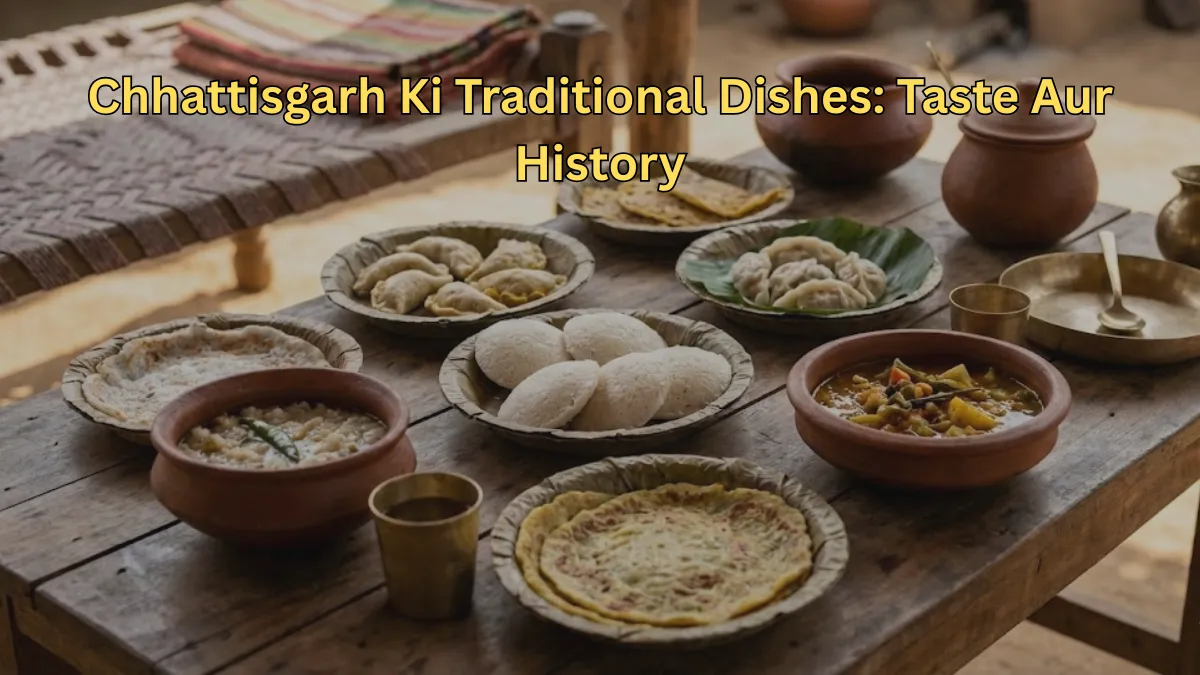
Have you ever tasted a cuisine that feels deeply connected to the land it comes from? Chhattisgarh, a central Indian state known for its forests, tribal heritage, and rice fields, offers exactly that experience. Its traditional dishes are simple yet rich in history, shaped by local agriculture, seasonal produce, and centuries-old cooking methods.
For food lovers in the US and beyond, exploring Chhattisgarh’s cuisine isn’t just about trying new flavors. It’s about understanding how geography, culture, and sustainability influence what people eat every day. From fermented rice delicacies to hearty lentil preparations, these dishes reflect resilience, nutrition, and tradition in equal measure.

Let’s take a deep dive into the authentic taste and history of Chhattisgarh’s traditional food.
The Cultural Roots of Chhattisgarh Cuisine
Chhattisgarh is often called the “Rice Bowl of India.” Over 20,000 varieties of rice are believed to be cultivated in the region. Naturally, rice forms the foundation of most traditional meals.
Influence of Tribal Communities
A large portion of Chhattisgarh’s population belongs to tribal communities. Their food traditions are deeply tied to:
- Forest produce
- Seasonal vegetables
- Wild herbs
- Millets and local grains
Cooking methods are typically simple: boiling, steaming, roasting, and slow-cooking over wood fires. Spices are used thoughtfully rather than heavily, allowing natural flavors to shine.
This approach aligns surprisingly well with modern health trends in the US, where clean eating and minimally processed foods are increasingly valued.
Staple Ingredients That Define the Cuisine
Before we explore specific dishes, it helps to understand the core ingredients:
- Rice (especially short-grain varieties)
- Lentils like urad and chana
- Local leafy greens such as lal bhaji
- Fermented rice batter
- Forest mushrooms and bamboo shoots
- Mustard oil and desi ghee
These ingredients aren’t just culinary choices—they reflect agricultural patterns, climate conditions, and cultural habits passed down through generations.
Iconic Traditional Dishes of Chhattisgarh
Now let’s explore the most loved and historically significant dishes.
Chila – The Protein-Rich Pancake
Chila is a savory pancake made from rice and lentil batter. It’s often compared to South Indian dosa but has its own regional character.
Why it matters:
- High in protein due to lentils
- Naturally gluten-free
- Traditionally eaten for breakfast or during festivals
The batter is fermented, which improves digestion and nutrient absorption—a practice supported by modern nutritional science.
Fara – Steamed Dumplings with Ancient Roots
Fara is made from rice flour dough shaped into dumplings and stuffed with spiced lentil paste. It is steamed, not fried.
This cooking method preserves nutrients and keeps the dish light. In tribal communities, steaming was a practical method that required minimal oil and resources.
Many food historians note that steamed dumplings like fara likely evolved as an efficient way to use leftover rice and lentils—an early example of zero-waste cooking.
Aamat – The Tribal Lentil Curry
Aamat is a mixed vegetable and lentil curry often prepared with forest vegetables and bamboo shoots. It has a slightly tangy, earthy taste.
What makes Aamat unique:
- Use of local herbs
- Subtle spices
- Slow cooking in earthen pots
The dish reflects deep ecological knowledge. Communities cooked what was locally available, adapting recipes seasonally.
Bore Baasi – The Ancient Probiotic Meal
Bore Baasi is perhaps the most fascinating dish. It’s simply cooked rice soaked overnight in water and eaten the next morning with onions or chutney.
While it may sound simple, fermentation gives it probiotic properties. In recent years, nutrition experts have highlighted fermented foods for gut health. Bore Baasi has been part of Chhattisgarh’s food culture for centuries.
In 2023, the state government even promoted Bore Baasi as a cultural food celebration, showing renewed interest in traditional eating habits.
Dubki Kadhi – Comfort Food with Simplicity
Dubki Kadhi features gram flour dumplings cooked directly in a yogurt-based curry. Unlike fried pakoras used in other Indian kadhi recipes, the dumplings are dropped raw into the gravy.
This technique:
- Reduces oil use
- Makes digestion easier
- Preserves softness
It’s a classic example of how Chhattisgarh cuisine prioritizes practicality and nutrition.
Festive and Seasonal Specialties
Traditional food becomes even more vibrant during festivals.
Thethri and Khurmi
These crispy snacks are prepared during Diwali and weddings. Made from rice flour and jaggery or salt, they reflect celebratory abundance.
Angakar Roti
This thick, rustic roti is cooked directly over fire or embers. Historically, it was ideal for farmers and forest workers because it stayed fresh longer and was easy to carry.
The Historical Evolution of These Dishes
Chhattisgarh’s cuisine developed under three major influences:
- Agricultural abundance of rice
- Tribal forest-based lifestyle
- Limited external invasions compared to other Indian regions
Because the region was relatively insulated, its food retained indigenous characteristics. While Mughlai or coastal influences shaped other Indian cuisines, Chhattisgarh remained grounded in local traditions.
Interestingly, as global food culture shifts toward sustainability and plant-based diets, Chhattisgarh’s traditional meals feel surprisingly modern.
Nutritional Perspective: Why This Cuisine Matters Today
Many traditional dishes of Chhattisgarh are:
- Plant-based
- High in fiber
- Low in refined sugar
- Naturally fermented
- Minimally processed
For American audiences exploring global cuisines, this region offers valuable lessons in balanced eating. For example:
- Fermented rice improves gut microbiome diversity.
- Lentil-based dishes provide essential amino acids.
- Leafy greens deliver iron and antioxidants.
Without formal nutrition science, communities created meals that supported energy, digestion, and long-term health.
Practical Tips for Trying Chhattisgarh Cuisine
If you want to explore these dishes at home or while traveling:
- Look for regional Indian restaurants that specialize in central Indian cuisine.
- Try making Chila or Fara first—they use accessible ingredients.
- Use short-grain rice for authentic texture.
- Avoid over-spicing; simplicity is key.
- Experiment with fermentation for better taste and digestion.
Cooking these dishes isn’t about complexity. It’s about patience, balance, and respect for ingredients.
Modern Revival and Growing Interest
In recent years, there has been a growing movement within India to rediscover regional cuisines. Chhattisgarh’s traditional dishes are now featured in culinary festivals and food tourism initiatives.
With global interest in authentic, farm-to-table experiences, this cuisine has strong potential to gain international recognition.
Food isn’t just sustenance—it’s identity. And in Chhattisgarh, every bowl of rice carries history.
Why Chhattisgarh’s Food Deserves Global Attention
In a world dominated by fast food and fusion trends, Chhattisgarh’s traditional cuisine stands out for its honesty.
It tells stories of:
- Farmers working in paddy fields
- Tribal families cooking over wood fires
- Seasonal cycles shaping daily meals
- Sustainable eating long before it became a trend
If you value authenticity, nutrition, and cultural depth, this cuisine offers all three.
Summary: Key Takeaways
Chhattisgarh’s traditional dishes are rooted in rice-based agriculture and tribal heritage. Staples like Chila, Fara, Aamat, and Bore Baasi reflect sustainable cooking methods, minimal processing, and natural fermentation. The cuisine prioritizes nutrition, seasonality, and simplicity. As global food culture shifts toward plant-based and probiotic-rich diets, these ancient recipes feel increasingly relevant and valuable. Exploring Chhattisgarh’s food is not just a culinary adventure—it’s a lesson in sustainable living and cultural preservation.